


The world has come to a point where it matters more than ever how and where materials are produced. Consumer patterns are affected by concerns over sustainability and ethical consumption. In combination with regulatory demand, growing consumer awareness can accelerate the circular economy by creating a pull for more sustainable and responsibly sourced materials.
Overstating the environmental performance or labeling products as “green” or “sustainable” without proper documentation is called greenwashing. To avoid this, we need more reliable and transparent information about where products come from and how they are produced.
With the naked eye, you cannot tell from the appearance of aluminium whether it is primary or secondary material, or if it’s made from pre- or post-consumer scrap. However, it means that the material’s footprint can vary greatly. We believe our customers should know not only the percentage of recycled content, but the actual footprint of recycled aluminium, which in turn will make it possible to define the footprint of the end product.
This is why we offer certified low-carbon and recycled aluminium that comes with a documented carbon footprint and assurances of safe and responsible production, designed to help customers reach their sustainability goals and gain the trust of climate-conscious consumers.
Our range of premium recycled aluminium, Hydro CIRCAL, is based on minimum 75 percent post-consumer scrap. It is delivered with an Environmental Product Declaration and verification statement from independent risk management and quality assurance company DNV. The production and raw materials can be traced on an individual batch level.

Considering aluminium’s infinite recyclability, it makes sense to design aluminium products in ways that make them easy to disassemble and recycle at the end of their life cycle. Up to two-thirds of a product's environmental footprint is decided in the design phase. In other words, engineers and product designers have great influence on a product’s sustainability through their material choices and design strategies.
Hydro EcoDesign is a design approach that focuses on creating aluminium products with increased functionality and reduced environmental footprint. It emphasizes the importance of selecting recyclable materials early in the design phase to create durable and resource-efficient products.
When engineers and designers familiarize themselves with the EcoDesign principles, they can help accelerate the circular economy by offering consumers greener and more sustainable choices.
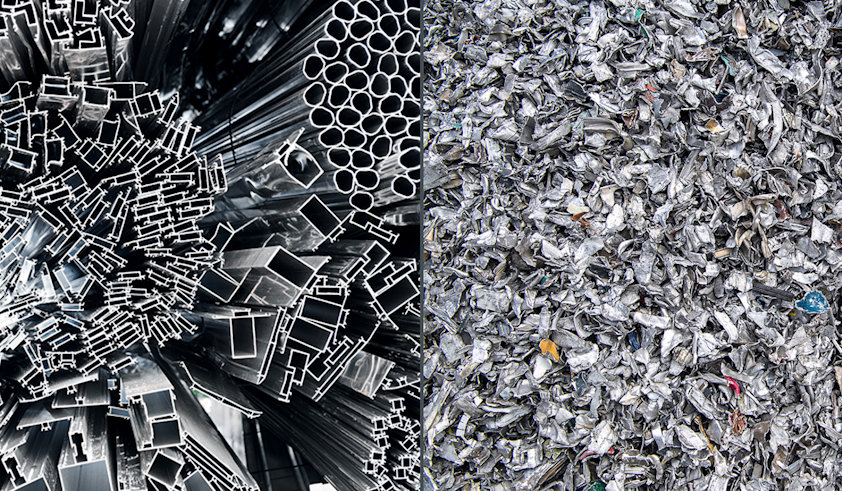
Increasing the share of recycled materials is an effective way to lower a product’s carbon footprint. Many companies turn to recycled aluminium in their efforts to decarbonize their value chain and achieve sustainability goals. However, not all recycled aluminium is equal.
To truly understand the carbon footprint of recycled aluminium, you need to know what kind of scrap is used in the recycling process. The ISO 14021 standard defines recycled content being made with post-consumer scrap and pre-consumer scrap respectively.
When we recycle aluminium from beverage cans, used windows, car parts or any other consumer product, the material starts a new life. Since the carbon emissions have already been accounted for during first time production, the carbon footprint of the recycled scrap is very low and mostly attributed to emissions from the remelting process. We refer to previously used aluminium as post-consumer scrap.
Aluminium scrap originating from production processes is different. This type of scrap originates from various stages of manufacturing before the material reaches the end consumer. It is typically clean, uncontaminated and highly recyclable, but it has not yet completed its life cycle and therefore carries the carbon footprint of the original material. We refer to this aluminium as pre-consumer scrap.
The recycling of pre-consumer scrap is a natural and necessary part of the aluminium value chain but does not neutralize the embedded carbon footprint. The recycling of post-consumer scrap, on the other hand, is the fastest way to achieve a low carbon footprint and prevents valuable materials from going to waste.
Still, large amounts of this valuable material are disposed of rather than being collected, sorted, and recycled. To address this, we are continuously exploring new possibilities both to source scrap and develop advanced sorting technologies to allow an increased amount of more challenging aluminium scrap to be sorted, repurposed, and given a new life.
Updated: June 17, 2026